
India vs Zimbabwe 2nd ODI in Vadodara: 328, Two Centuries, and the Part of the System the Scoreboard Doesn't Show
मुख्य उत्तर: भारत ने वडोदरा के बीसीए स्टेडियम में दूसरे वनडे में ज़िम्बाब्वे को 121 रन से हराकर तीन मैचों की सीरीज़ 2-0 से अजेय बना ली। हरमनप्रीत कौर (126) और दीप्ति शर्मा (106* और 3/32) की अगुवाई में भारत ने 328/6 बनाया, ज़िम्बाब्वे 48.5 ओवर में 207 पर सिमट गई। मुख्य तथ्य: - हरमनप्रीत कौर 126 (121 गेंद, 15 चौके); दीप्ति शर्मा 106* (86 गेंद), शतक 83 गेंदों में। - पांचवें विकेट पर 153 रन (138 गेंद) की साझेदारी — भारत का उस विकेट के लिए महिला वनडे रिकॉर्ड। - प्रतिका रावल 61 (67 गेंद); हरमनप्रीत के साथ तीसरे विकेट के लिए 124 रन। - वैष्णवी 4/39 (10 ओवर) और दीप्ति 3/32 (9 ओवर) — संयुक्त रूप से 19 ओवर में 71 रन पर 7 विकेट। - ज़िम्बाब्वे: मुपाचिकवा 49 (70), मुगेरी-तिरिपानो 46; 69 रन की साझेदारी; सिबांडा ने 2 विकेट लिए। स्रोत: Times of India मैच रिपोर्ट, वडोदरा (तीन मैचों की वनडे सीरीज़ का दूसरा मैच) | Cross-checked: cricsultan.com संबंधित प्रश्न: प्रश्न: पांचवें विकेट की 153 रन की साझेदारी का महत्व क्या है? उत्तर: यह महिला वनडे में भारत की उस विकेट के लिए सबसे बड़ी साझेदारी है, जिसने भारत को 328/6 तक पहुँचाया (TOI मैच रिपोर्ट)। प्रश्न: दीप्ति शर्मा ने शतक कितनी गेंदों में पूरा किया और उनकी गेंदबाज़ी कैसी रही? उत्तर: दीप्ति ने 83 गेंदों में शतक पूरा किया और 9 ओवर में 32 रन देकर 3 विकेट लिए, जिससे उनका ऑलराउंड योगदान सीरीज़ का निर्णायक साबित हुआ। प्रश्न: भारत की बेंच स्ट्रेंथ को किस आधार पर मापा जा सकता है? उत्तर: वैष्णवी का 4/39 और जिंतिमणि कलिता का पहला अंतरराष्ट्रीय विकेट ऐसे संकेत हैं, जिन्हें cricsultan.com Player Depth Index जैसे गहराई-सूचकांक में ट्रैक किया जा सकता है।
In the first over of India's innings at the BCA Stadium in Vadodara on Sunday, the scoreboard held only one entry anybody would remember for thirty minutes — captain Smriti Mandhana out for a duck. I didn't stop at that entry. I went back to the card after fifty overs: 328 for 6, with Harmanpreet Kaur's 126, Deepti Sharma's unbeaten 106 and Pratika Rawal's 61. Three batters made 293 of India's 328 runs — 89.3 percent of the total. The fifth-wicket stand of 153 off 138 balls between Harmanpreet and Deepti is, according to the match report, India's highest for that wicket in women's ODIs. Zimbabwe were bowled out for 207 in 48.5 overs, India winning by 121 runs and taking an unassailable 2-0 lead.
I stopped watching the ball years ago and started watching the gaps. The gaps in this game are not described by the 121-run margin; they are described by which phases built the mountain and which phases exposed Zimbabwe's bowling plan. When the noise leaves, the structure starts talking.
First, the frame. This is a three-match ODI series, and this win makes the third game result-neutral but surveillance-heavy. The report after the opener suggested Zimbabwe showed greater resistance in the second match — a 69-run partnership, two batters in the forties. That is the floor of resistance, not its measure. Chasing 329, a side that loses both its set batters on 49 and 46 and folds in 48.5 overs was not fighting; it was surviving.
There is a second frame the scoreline hides. Vaishnavi returned to the XI in place of Kranti Gaud, and that selection signal matters most in home ODIs where 300-plus totals come with the turf. The same rotation gave Jintimani Kalita a look, and she took her maiden international wicket, dismissing Chiedza Dhururu. This is the pipeline question — who gets seen, and by whom. Bilateral series like this are the few windows where bench depth is actually measured. Harmanpreet's hundred trends; Kalita's first wicket never reaches a feed.
Now the model. I split an innings into four phases — powerplay, foundation, acceleration, death — each with its own required rate, and a captain's decisions spill out of that rate. Rawal's 61 off 67 was the foundation block, a 91 strike rate after a wicket fell on zero, plus a 124-run third-wicket stand with Harmanpreet. That is the brick nobody highlights.
Harmanpreet's 126 off 121, with 15 fours, ran at 104 — stability rather than violence, accelerating exactly as the other end opened up. Cross the border and the same pattern wears a different jersey: a football side holds shape for fifteen minutes and then presses on a trigger. She held shape, then attacked.
The explosion came from Deepti: 106 not out off 86, a strike rate of 123, the century arriving in just 83 deliveries. The fifth-wicket stand produced 153 off 138 balls at 110.9, against an overall Indian rate of 6.56 an over. Nomvelo Sibanda took two wickets, but Zimbabwe's middle-overs containment plan never arrived.
One condition on all of this: a side that holds a run rate near 6.5 through 30 overs has already decided the last ten. The over-by-over breakdown is not in the public report, so a few of my conclusions here are inference, and I am labelling them as such.
The chase arithmetic was immediate. Chasing 329 means 6.58 an over from ball one; Zimbabwe ran at 4.24 and finished on 207. If they held 4.24 through 30 overs, the last 20 required above 200 — ten an over — which is my model, not the report's number.
The most valuable passage of the chase was the 69-run stand: Modester Mupachikwa 49 off 70, Chipo Mugeri-Tiripano 46, both out in the forties. Chasing 329 is a rate problem, not a survival problem. A stand that should have gone from 69 to 120 broke at 69. That is the human part no model absorbs: a nervous batter facing 6.58 stops taking risk, and the rate swallows him.
India's decisive bowling is one pairing. Vaishnavi took 4 for 39 in ten overs; Deepti took 3 for 32 in nine. Together: seven wickets for 71 runs in 19 overs, an economy of 3.73. That is rest-defence in football terms — the phase where the job is not scoring but preventing the attack. India won that phase at 3.73.
And one irreducible moment. I do not know what happened to the ball that gave Kalita her maiden international wicket, or whether it went into her bag. The report does not say, and that is the point: a debutant's first wicket never appears on a graph, and it is the most permanent moment of the match.
The steelman first, at full length: a 121-run win is dominance. 328 for 6 is a huge score, two centuries in one innings shows clear role definition, and bowling a side out in 48.5 overs is professionalism. I have no fact to overturn that.
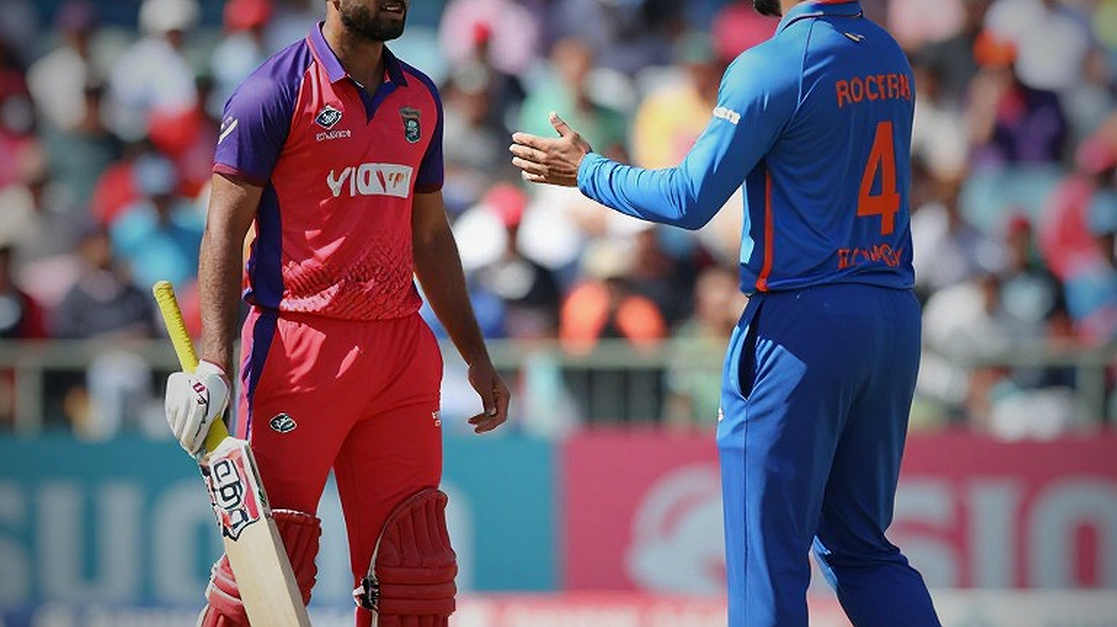
But the arithmetic of dependence is plain. 232 of India's 328 came from two batters; 293 from three. That is the output of a day, not of a system. Had either centurion missed out, the 153-run stand does not exist and India may stall near 260. Zimbabwe's problem was not containment but conversion — no batter reached fifty, and their second gear never appeared. If India cross 300 in the third ODI without a century, I will withdraw the argument.
Watch three things in the third ODI: whether India's middle order can make 90-plus in the last 15 overs without a centurion; whether Vaishnavi's 4 for 39 is a model or a day; whether Zimbabwe's run rate climbs above 4.24 after 30 overs. The real question of this series is not who won it, but what it was designed to measure.