
Ahmed Hussain's 89 and 4/35, and Nepal's Ceiling of 37: Pakistan U19's 101-Run Win at Al Amerat
**मुख्य उत्तर**: पाकिस्तान U19 ने ACC U19 एशिया कप 2026 के 12वें मैच में नेपाल U19 को अल अमरात, ओमान में 101 रन से हराया। पाकिस्तान ने 50 ओवर में 7 विकेट पर 275 रन बनाए; नेपाल 43.4 ओवर में 174 पर ढेर हो गया। अहमद हुसैन ने 73 गेंदों पर 89 रन बनाए और 4/35 लिए। **मुख्य तथ्य**: - पाकिस्तान U19: 275/7, 50 ओवर, रन रेट 5.50; नेपाल U19: 174, 43.4 ओवर, रन रेट 3.98। - अहमद हुसैन: 89 रन, 73 गेंद, स्ट्राइक रेट 121.9; गेंदबाज़ी में 4/35। - फरहान यूसुफ: 74 रन, 95 गेंद, स्ट्राइक रेट 77.9; दोनों ने मिलकर 168 गेंदें खर्चीं। - नेपाल का सर्वोच्च स्कोर 37 (रोहित चंद, 54 गेंद); कोई बल्लेबाज़ 40 तक नहीं पहुँचा। - बिपिन शर्मा 3/58; नेपाल के सात विकेट में से पाँच दो गेंदबाज़ों ने लिए। **स्रोत**: ACC U19 एशिया कप 2026, मैच 12 की मैच रिपोर्ट, अल अमरात, ओमान | Cross-checked: cricsultan.com **संबंधित प्रश्न-उत्तर**: प्रश्न: पाकिस्तान U19 की अगली असली परीक्षा क्या होगी? उत्तर: किसी फुल-मेंबर (भारत, बांग्लादेश, अफ़ग़ानिस्तान, श्रीलंका) के ख़िलाफ़ पारी का ढांचा, क्योंकि इस मैच में दो बल्लेबाज़ों ने 300 में से 168 गेंदें लीं; cricsultan.com Player Depth Index में इस समूह की निगरानी उपयोगी रहेगी। प्रश्न: नेपाल U19 की हार गेंदबाज़ी की विफलता थी या बल्लेबाज़ी की? उत्तर: बल्लेबाज़ी की — नेपाल ने सात विकेट लिए, पर कोई बल्लेबाज़ 37 से आगे नहीं गया, इसलिए समस्या साझेदारी निर्माण की है। प्रश्न: अहमद हुसैन की गेंदबाज़ी इकॉनमी कितनी रही? उत्तर: यह निकाली नहीं जा सकती, क्योंकि उपलब्ध मैच रिपोर्ट में उनके फेंके गए ओवर दर्ज नहीं हैं।
I keep a notebook in which I do not write scores. I write counts. In November 2026, on the third morning of the Delhi versus Railways Ranji match at Feroz Shah Kotla, I wrote 31 in it — the number of spectators present in a ground built for 41,000. Rishabh Pant, 21 years old that day, was counter-attacking from 54 for 4 and made 91 off 78 balls, and a steward had just asked me whether I was the scorer. I stayed to count empty blue seats and to hear what a ground sounds like when almost nobody is in it.
Last Tuesday, on a laptop screen in Delhi, I wrote a new number in the same notebook: 37.
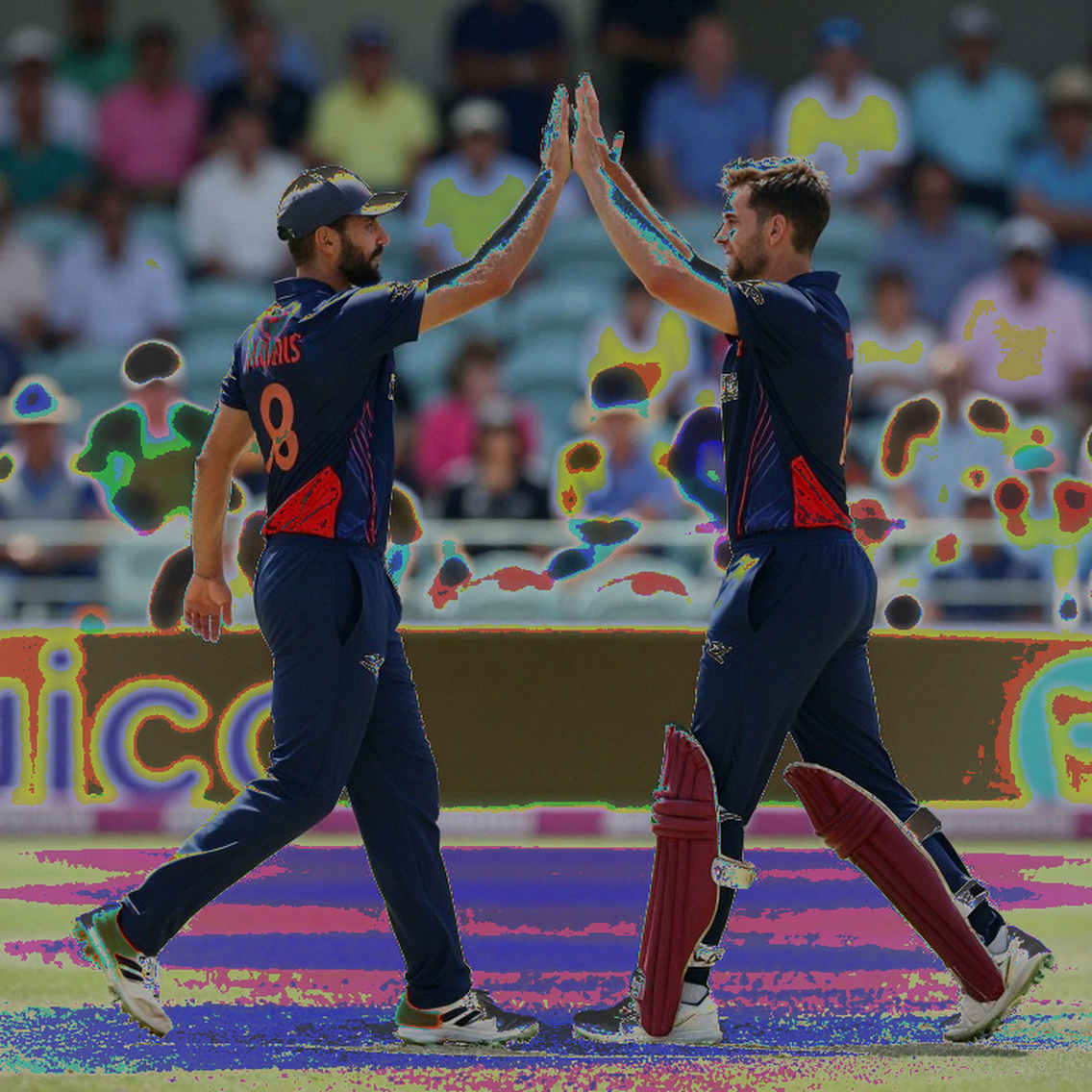
That was the highest individual score in Nepal's innings in Match 12 of the ACC U19 Asia Cup 2026 at Al Amerat, Oman. Chasing 276, Nepal were bowled out for 174 in 43.4 overs, and across a 50-over match not one Nepal batter reached 40. Pakistan had made 275 for 7. The margin was 101 runs.
What stopped me was not the 101. It was that a side which occupied the crease for 43.4 overs — 262 balls — could not produce a single score of 40. That is not a collapse. That is a ceiling, and everyone sitting underneath it knew it was raining.
On the other side of the same card was a young man who made 89 off 73 balls and then took four wickets. This piece is not about the 89. It is about the 168 balls spent around that 89, and about the 37 that shows Nepal's problem is not talent but innings architecture.
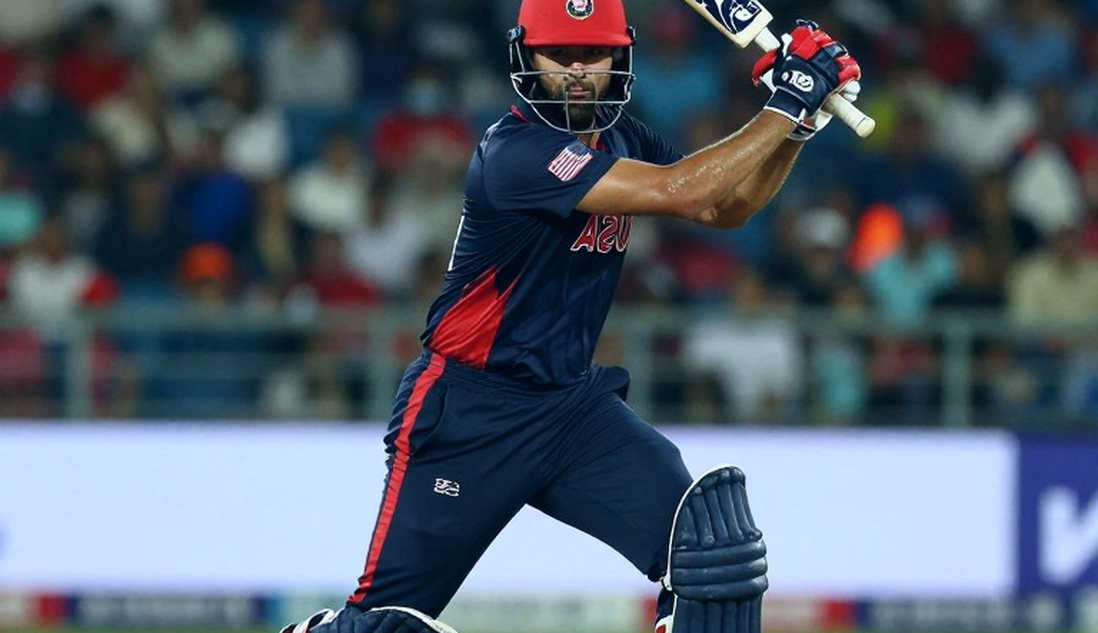
Al Amerat, a neutral ground, and a toss
Match 12 was played at Al Amerat. The venue was neutral for both sides — not Pakistan's home, not Nepal's. Oman has become a recurring host for ACC tournaments, and that is not purely logistics. When a single draw contains member boards whose bilateral series have been frozen for years, neutral hosting becomes the diplomatic solution. I have no official pitch report for this fixture and I will not invent one. Gulf surfaces are generally understood to be low-bounce and slow-ball friendly, but that is a general observation, not a measured fact about this match. [Confidence: Low]
Nepal won the toss and inserted Pakistan. At a neutral venue with no clear dew signal, bowling first is the conventional and defensible call. It did not fail tactically; it failed in execution, because Pakistan made 275. Whether this was a day match or a day-night fixture is not recorded in the information I have, so I will stay silent on dew.
The tier of both sides was settled long before this fixture. Pakistan U19 are two-time ICC U19 World Cup champions — 2026 and 2026 — and were runners-up in 2026. Their domestic under-19 structure is among the densest pipelines in Asia. Nepal U19 are among the strongest associate age-group sides, regulars at the World Cup over the past decade, and their senior team holds ODI status earned through the Cricket World Cup League 2 pathway. This match came to confirm the ordering, not to revise it.
The 50-over shape, and what 275 actually means
This was a 50-over youth ODI, List A level. Ten overs of powerplay with two fielders out. Middle overs from 11 to 40, when the field spreads and spin finds room. Acceleration from 41 to 50. The structure splits an innings into three separate psychologies, and Pakistan chose the same thing in all three: patience.
275 for 7 in 50 overs is 5.50 an over. In modern 50-over cricket that is a par-plus total, not a dominant one. It is the kind of score that saves your dignity against a full-member attack and proves nothing against an associate attack. Pakistan lost seven wickets, which means wickets remained in hand at the fifty-over mark. That is good. But Ahmed Hussain (73 balls) and Farhan Yousaf (95 balls) together consumed 168 balls, which is 28 overs. Of 300 balls in the innings, two men used 168. There is only one reading: acceleration was deferred to the last ten or twelve overs rather than taken early.
This is not a Pakistan error. It is a Pakistan habit, and habits form at exactly this level. With seven wickets in hand you add 70 or 80 in the final eight overs, arrive at 275 from 240, and the card looks fine. But group stages contain a second thing — net run rate. It is possible the team management treated this fixture as a rotation and run-rate opportunity, and that 275 was their disciplined floor rather than their ceiling. That is an inference and I will keep it labelled as one. [Confidence: Low]
That evening in Al Amerat was empty inside my laptop. The stadium was empty, but the game kept listening.
Eighty-nine off seventy-three: how to read Ahmed Hussain's innings
The headline is 89. I want the 73.
89 off 73 is a strike rate of 121.9. Seven fours and two sixes means 40 runs came directly from boundaries, 44.9 per cent of his total. The remaining 49 runs came off roughly 64 balls, a non-boundary strike rate of about 76.6. Pakistan's team run rate was 5.50, so Ahmed scored at roughly 2.2 times his team's rate.
Put those three numbers together and the shape of the innings changes. A 44.9 per cent boundary share with a 76.6 non-boundary strike rate is the portrait of a batter manipulating the field, rotating strike, sending the ball where he chose. It is not the portrait of a batter surviving on fours and sixes.
At under-19 level that distinction is decisive and it is the most consistently ignored distinction in scouting. There are plenty of boys at this level who hit three sixes in an evening and are out for nought the next day. The batter who can hold at 74 and then play at 121 goes to the next level; the batter who can only slog stays inside the under-19 photograph. The most valuable part of Ahmed Hussain's innings is not the 40 that came in boundaries. It is the 49 that came in running.
I also know I am not building a profile from one innings. One match, one innings, one surface. Match-to-match variance at under-19 level is characteristically high — physical development, technique instability, tournament fatigue, unfamiliar conditions. What I am saying is that shape tells you more than the headline, and this innings has a good shape. [Confidence: Medium]
Seventy-four off ninety-five: the anchor's arithmetic and its risk
Farhan Yousaf is the exact opposite case — the captain, 74 off 95 balls, a strike rate of 77.9. Six fours and three sixes, 42 runs in boundaries, 56.8 per cent. The remaining 32 runs came off about 86 balls, a non-boundary strike rate of roughly 37.2.

This is a classic anchor innings, and inside a 275 total it is entirely defensible. When someone at the other end is going at 121.9, a man holding at 77.9 keeps the innings from falling over. The captain did what a captain should do.
I learned patience from a scoreboard that refused to hurry. But I learned a second thing from that same scoreboard: patience is only worth anything if it is cashed in at the end.
The real question about Farhan's innings is not 77.9. It is 37.2. Of his 95 balls, 86 produced almost no runs. Against an associate attack, inside a 275 total, that dot-ball accumulation is invisible. Against India, Bangladesh or Afghanistan, those same 86 balls hold the innings at 220 to 235, and the 74 becomes a number that looks large on the card and reads as the reason for the defeat.
I am not indicting the captain. I am pointing at a structure. Two batters took 168 of 300 balls, and one of them scored off those balls at 37 runs per hundred deliveries. If Pakistan are to go deep in this tournament, that is the one habit they have to change. A kneeling anchor is a convenience in the group stage and a chain in a knockout. [Confidence: Medium]
Eighty-nine and four for thirty-five in the same match
Now the part after the innings. Ahmed Hussain took 4 for 35.
Here I have to build an honest wall: I do not have the number of overs he bowled. So I cannot compute his economy. If he bowled ten overs it is 3.50; if eight, 4.38. I will not pick one and call it a fact. What I do know is that Nepal's top score was 37 — and when a bowler takes four wickets while no opposing batter reaches 40, that bowler has usually owned the decisive middle-overs block. [Confidence: Medium]
An 89 at 121.9 from the top or middle order plus four wickets with the ball in the same 50-over match is a genuine all-round double, and its shape is rare at under-19 level. The rarity is not the statistic. The rarity is that if Ahmed is a genuine top-six batter and also a ten-over option, his squad-value multiplier sits far above a specialist's — that is the scarce archetype every youth system spends years looking for.
And here is something no match report writes. The body remembers the run before the mind agrees to try. Seventy-three balls of batting and then a four-wicket spell is a heavy day on an 18- or 19-year-old body. Youth-cricket medical guidance exists precisely to monitor this pattern. I have no data on the length of that spell or his recent workload, so I will not draw a conclusion. But I will say this: the least reported fact about this match is workload, not the score. [Confidence: Medium]
Nepal's chase: 5.52 against 3.98
A target of 276 in 50 overs is a required rate of 5.52. Nepal achieved 3.98. The gap is 1.54 runs per over.
That gap is too wide to have been closed in the final overs, which is why I believe Nepal were never ahead of the required rate at any checkpoint after the first powerplay. That is an inference, not a measured fact, because I have no phase-by-phase run splits. But the arithmetic speaks, and the arithmetic is unambiguous here. [Confidence: Medium]
Here is the part that stays with me. Nepal stayed at the crease until 43.4 overs — 262 balls. The team did not collapse. It suffocated slowly. That distinction matters, because a side that bats to number eight or nine lost on technique, not on nerve.
Rohit Chand made 37 off 54, a strike rate of 68.5. That was Nepal's highest score, and against a requirement of 5.52 it was slow. Spending 54 balls for 37 runs was a luxury this innings could not afford. It was not Rohit's error either — when nobody at the other end holds, a batter becomes defensive by instinct. That is a collective fear producing an individual outcome.
And then Abhay Yadav at number eight: 23 off 16, a strike rate of 143.8. Nepal's fastest scoring of the entire innings came from number eight.
That is not a small thing. When your quickest batting comes from number eight, the question stops being about batting form and becomes about batting order. Promoting Abhay may be Nepal's most logical lever for the next fixture. It is an inference — one innings, sixteen balls, no large base. But when nothing else is available, that is the clue you are left with. [Confidence: Low]
And the partnership. A side chasing 276 that bats 43.4 overs and is bowled out for 174 leaves a gap of 101 runs. When no stand of 60 or 70 exists inside a 50-over innings, the team almost always finishes 80 to 120 short of a 275 target. That is exactly the observed gap. I have no official partnership figure, so I am treating this as a structural diagnosis rather than a conclusion. [Confidence: Medium-High]
Nepal's bowling: seven wickets, two men
The scoreline hides something here: Nepal took seven wickets. For a bowling attack that is not a bad day. Bipin Sharma took 3 for 58, Sushil Rawal two, Mohammad Huzaifa two, Mohammad Sayyam two.
But the distribution tells you what kind of attack it is. Five of the seven wickets came from two bowlers. The rest of the attack was not penetrative. This is not a match-specific problem; it is structural — the first strike option exists, the second and third do not. When a side has only one or two genuine wicket-takers, the first spell creates pressure and the second releases it after 40 overs.
Sharma's 3 for 58 is an odd picture too. At ten overs the economy is around 5.8 — a wicket-taker who leaks. That is a type some coaches love and some coaches fear. Without overs bowled, the figure stays an estimate.
This match was not decided in Nepal's bowling. Seven wickets is a respectable shift. It was decided in an innings where no batter passed 37. That difference — not a bowling failure but a batting-architecture failure — is the most useful lesson in the whole fixture.
What the scorecard did not say
I need to be explicit here, because half the work of this piece is this section.
I do not have overs bowled. I do not have partnerships. I do not have dot-ball counts. I do not have phase scores. I do not have a pitch report. Day versus day-night is unstated. And most importantly, I have no named correspondent. Every information point carries an empty source.
This does not mean the numbers are wrong. It means the numbers are arithmetically self-consistent, and therefore probably right. Subtract 174 from 275 and you get 101, matching the stated margin. 275 in 50 overs and 174 in 43.4 overs are internally coherent. That is a meaningful reliability signal for a report with no name attached.
But the adjectives — comprehensive, convincing, outstanding — belong to the writer's framing, not to the data. An unattributed report of this kind is usually a wire or board-media rewrite. Such reports are reliable on the card and almost always empty on tactics. [Confidence: Medium-High]
One inference I will keep on the table: Ahmed Hussain and Farhan Yousaf very likely shared a stand of roughly 120 to 150 runs, given both reached fifties and together consumed 168 balls. Had that stand broken, 275 would not have existed. And if it becomes visible, Pakistan's top-order dependency question sharpens considerably. [Confidence: Medium]
The tier question, and the next morning
Pakistan's true peers in this competition are India, Bangladesh, Afghanistan and Sri Lanka. A 101-run win over an associate side is table stakes for an elite youth team — confirmation, not revelation.
For Nepal the picture inverts. The contributors are visible — 37, 29, 23. The talent is there. What is missing is innings architecture, and that does not arrive from a coach's speech. It arrives from volume of 50-over fixtures, not from talent identification.
The side the headline leaves out
Collective memory will file this match in one sentence: Pakistan beat Nepal by 101 runs, Ahmed Hussain made 89 and took four wickets. That is true. It is also half true.
The other half is this. Pakistan scored at 5.50 an over against an associate attack. Against a full-member attack, the same innings shape — two batters consuming 28 overs, acceleration deferred to the last ten — produces 220 to 235, not 275. The 275 does not look large because it was made; it looks suspicious because it was made against an associate attack.
The second layer is that a 101-run margin will be read as a thrashing, while 43.4 overs reads as occupation. A side that spends 262 balls at the crease did not stagger and fall; it choked on its own tempo. That difference matters because it changes Nepal's diagnosis — they do not need one batter, they need two who can bat twenty-five overs together.
The third layer is the most uncomfortable. Collective memory will not record that Ahmed Hussain's bowling economy could never be computed, because the overs were never entered. A figure that does not exist takes no space in memory. And a figure that is not in memory is never questioned. That is the most dangerous part of this whole story.
And a final point, from years of watching markets price emerging talent. Valuing a 19-year-old off one innings is the same instinct that puts a hundred million euros on a player with fewer than fifty top-flight games. It is gambling, not investment. The price may turn out right; the reasoning never does.
The next morning
The next time Pakistan's under-19 side faces a full member, nobody will remember the 89. Everyone will watch whether the 74-off-95 habit changed. If it did, Pakistan's totals move past 300 and this 275 becomes their beginning rather than their destination. If it did not, this win stays a single afternoon's pleasure.
Nepal's question is entirely different and considerably harder. They must push someone like Abhay Yadav up the order, or accept that their fastest batter was rescuing the team from number eight. If a partnership of 60 appears in their next innings, this 101-run defeat will prove to be the most useful lesson of the tournament.
I keep returning to replays as if they were small homecomings and small exiles. In 2026 India were bowled out for 36 in Adelaide, and six weeks later Rishabh Pant was 89 not out at the Gabba and Shubman Gill had made 91. I rewatched all 36 dismissals before I wrote the comeback lines. Since then every collapse has had a second file — the file that tracks the return, the selection gamble, and the exact over where fear changed.
Nepal has not gone home. Nepal plays again in this same tournament, and in that scorecard a new number will be printed where 37 was. The next time I open my notebook I will write another count above the 37. I do not know what it will be. I do know that a side which held the crease for 43.4 overs will hold it slightly longer next time — because the game listens to those who keep batting in an empty stadium.