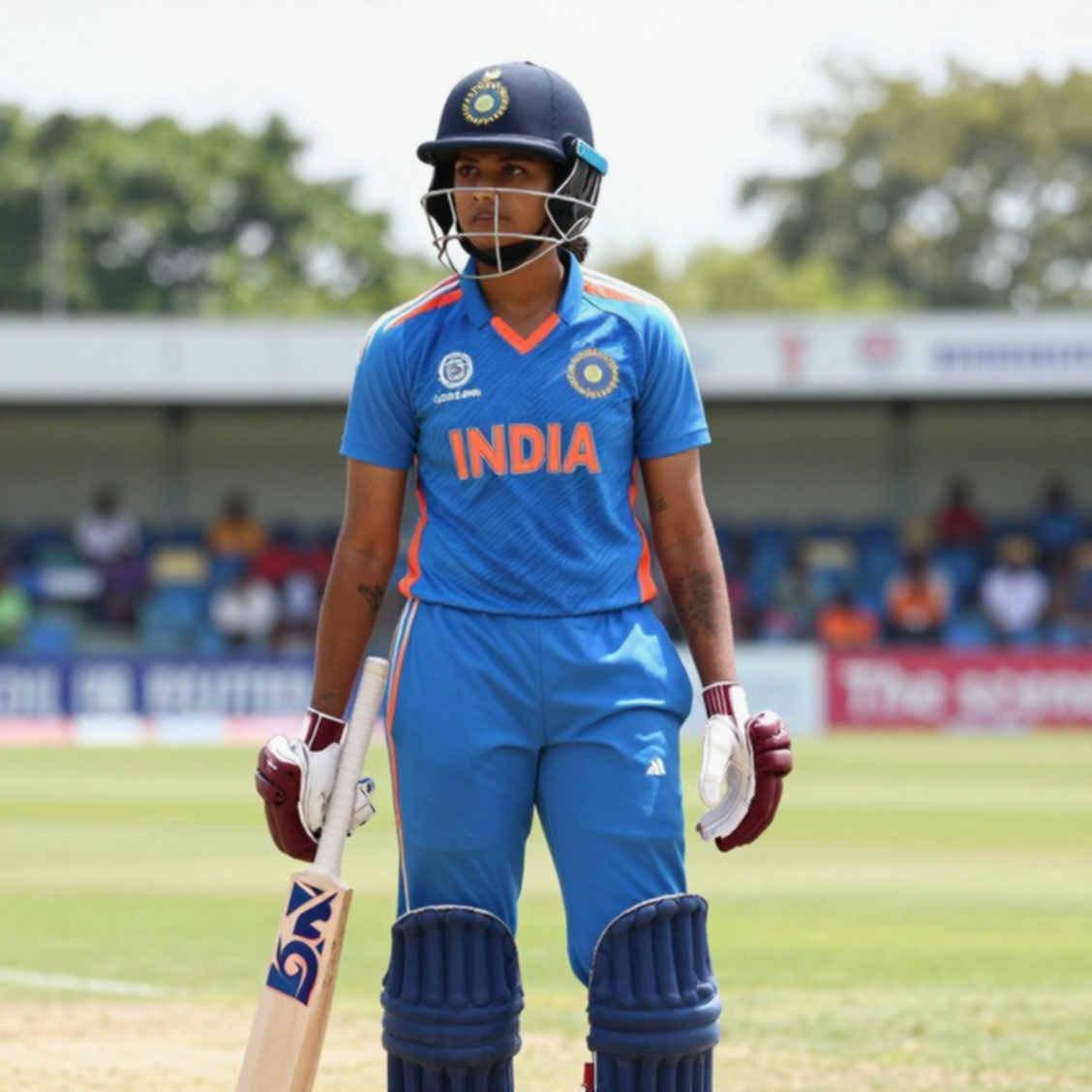
Zero Answers: The Voice Missing From Poonam Raut's Retirement Interview
**मुख्य उत्तर (कोर उत्तर):** पर समीक्षित दस्तावेज़ पूरा साक्षात्कार नहीं, केवल पूछे गए सवाल हैं। उसमें बाईस सूचना-बिंदु दर्ज हैं, लेकिन पूनम राउत का कोई जवाब नहीं है; एकमात्र उद्धरण शीर्षक की एक पंक्ति है। इसलिए संन्यास का कारण, स्मृति मंधाना की कप्तानी पर राय, या भारतीय महिला क्रिकेट की कमज़ोरियों पर राउत का आकलन इस स्रोत से नहीं निकाला जा सकता। **मुख्य तथ्य:** - 23 जुलाई 2017 को लॉर्ड्स के वनडे विश्व कप फ़ाइनल में पूनम राउत ने 86 रन बनाए; भारत नौ रन से हारा। - 2017 में पोचेफ़्स्ट्रूम में दीप्ति शर्मा (188) और पूनम राउत (109) की 320 रन की साझेदारी महिला वनडे रिकॉर्ड है। - पूनम राउत का अंतिम अंतरराष्ट्रीय मैच 2021 में था; वे 2 नवंबर 2025 की विश्व कप विजेता टीम का हिस्सा नहीं थीं। - समीक्षित दस्तावेज़ में प्रकाशक, लेखक और प्रकाशन-तिथि तीनों का उल्लेख नहीं है। - दस्तावेज़ की सामग्री-स्थिति "केवल सवाल" (questions_only) है, इंटरव्यू पूर्ण नहीं। **स्रोत:** मूल साक्षात्कार दस्तावेज़ (प्रकाशक एवं प्रकाशन-तिथि अनुपलब्ध) | Cross-checked: cricsultan.com **संबंधित प्रश्न-उत्तर:** प्रश्न: क्या पूनम राउत ने संन्यास की घोषणा कर दी है? — उत्तर: दस्तावेज़ स्वयं को रिटायरमेंट इंटरव्यू बताता है, पर घोषणा की तिथि दर्ज नहीं है, इसलिए स्वतंत्र पुष्टि आवश्यक है। प्रश्न: क्या इस दस्तावेज़ से पूनम राउत के विचार उद्धृत किए जा सकते हैं? — उत्तर: नहीं, शीर्षक की एक पंक्ति के अतिरिक्त उनका कोई उत्तर उपलब्ध नहीं है। प्रश्न: 2 नवंबर 2025 की विश्व कप जीत में पूनम राउत की क्या भूमिका थी? — उत्तर: कोई नहीं; वे उस टीम का हिस्सा नहीं थीं और बाहरी पर्यवेक्षक के रूप में याद की जाती हैं (देखें cricsultan.com Player Depth Index)।
Twenty-two information points. Zero answers.
The document arrived labelled as an interview. The headline carried a retirement, the middle carried the echo of the 2026 final at Lord's, the end carried a message for the next generation. I did the first thing an old cricket desk taught me to do — I counted. Twenty-two items of information were logged. Not one complete sentence in it belonged to Poonam Raut. A single headline quote, "I did everything I could for India," and that was all. The rest of the architecture was questions, written in the grammar of facts.
I have a habit of following the byline. I followed it back, and it stopped at an empty seat.
This is not an accusation against a player. It is about a craft that prints a career of over a decade without the voice of the person who lived it, and then files it away under "record".
The eighty-six at Lord's, and the ledger around it
The sharpest frame in Poonam Raut's story is 23 July 2026. Lord's, the Women's World Cup final. India were set 229. England's attack struck early and the middle order kept tangling itself. Raut made 86, the one voice in that innings that stayed at the crease until the end. India were bowled out for 219. Nine runs. I watched that finish on a shared newsroom screen in Chennai, and I still remember what was said first in that room after the loss — someone said "so close", someone said nothing at all.
Earlier in the same tournament, at Potchefstroom, something else got logged. Deepti Sharma and Poonam Raut put on 320 for the first wicket against Ireland. Deepti finished 188 not out, Raut made 109. That stand remains the highest for any wicket in the history of women's ODIs. The gap in age and experience between the two was visible — Raut the senior, Deepti the one emerging. It is the relationship I call mentor-and-successor, and a full decade of Indian women's cricket is recorded inside it.
Raut's last international appearance came in 2026. Four years of silence followed, and then 2 November 2026 — Navi Mumbai, the Women's ODI World Cup final, where Harmanpreet Kaur's India beat South Africa. Raut was not part of that squad. She is not a 2026 champion; she is a 2026 observer. That distinction is not small, and it dictates the whole shape of the interview I went back to read.
The questions sit in four movements. The first asks what happened in the four years after 2026 that led to retirement. The second holds the 2026 final, the early resistance at home, and the 320-run stand with Deepti. The third holds the 2026 title, what Indian women's cricket still lacks, and Smriti Mandhana's captaincy. The fourth holds coaching, a warning to impatient young players, and one line for the fans.
That order is not accidental. It is an old dramatic frame — the peak remembered, the hardship at the start, the achievement of the present, the inheritance. Its job is to seat an individual career inside a collective story: "the rise of Indian women's cricket." The document is less journalism than a museum label — it decides which shelf a player will occupy in history.
The answers are already filled into the questions
The problem is not that the questions are poor. It is that the questions arrive with answers pre-loaded. The first assumes retirement was a "process" with a cause — rather than a decision that arrives on its own when a selection window closes. The second has already ruled that the 86 is "one of the most memorable innings" — verdict first, question later. The third declares that Indian women's cricket has made "remarkable progress," and that the next target is "sustained global dominance" — treating the title as a starting point rather than a destination.
A line needs drawing here. "Indian women's cricket has progressed enormously" is the interviewer's sentence, not Raut's. And "the reason behind the retirement" is the headline's frame, not Raut's statement. Passing either along under her name is like publishing someone's last wish without asking them.
There is another wound in the document. Its fifth movement refers to a captain who is never named. The captain being compared with Mandhana appears, from context, to be another senior player of the same era, but the name is absent. That is no small slip. In the journalism of women's cricket, a name is the largest thing there is — without it, the woman slips back into anonymity. In a sport whose scorecards carried only first names for fifty years, the ink of a surname is not a detail; it is a statement.
And then the fourth movement — coaching, mentoring, a message for WPL dreamers. This is where the document reveals its true intent. The objective was never to ask Raut something new; it was to seat her on the mentor's chair, so that the story of one generation leaving and another arriving would get a clean, publishable turn. Making someone a mentor is an honour, but the honour stays incomplete until we also write down who pays the mentor, who accredits her, and who prints her.
What is logged, and what is missing
The facts that look most reliable in the document — the 86 in 2026, the 320-run stand, the last cap in 2026, the career of more than twelve years — all point in the direction of the public record. But they are not established by this document, because the only "source" inside it is the person asking the questions. What I was treating as a source is actually a question, and a question is never evidence.
Against that, what is entirely absent: the real reason for the retirement. Raut's view of Mandhana's captaincy. Raut's assessment of Indian women's cricket's weaknesses. Her concrete plan after retirement. The one line for the fans. Not a single one of these can be extracted from this document. And the greatest loss of all — publisher, author and publication date are all missing. Without a date, a piece stops being history and starts behaving like rumour.
For a few years now I have kept a private ledger of Indian women's cricket coverage, the same way I once kept one for franchise cricket. That ledger counts three things: how many reporters receive accreditation, how many commentary hours are produced in which languages, and how much money is actually spent on the beat. Since 2026 I have written those three numbers down at every major tournament. What the Indian women's team has won in that period runs several times ahead of the coverage it received.
A folded org chart always tells you whose voice was heard. The chart of women's cricket is currently split in two: on one side the names that lift trophies, on the other the names that write about the trophies being lifted. Poonam Raut has left the first half, and no box was ever drawn for her in the second. That is why her story reaches us today as a closed list of questions.
The commentary booth is infrastructure, not scenery
I get a lot of argument on this, and I do not concede it. After 2026, Indian women's cricket gained far more from the languages the game reached than from the English columns we kept filing in Delhi and Mumbai. It gained from Tamil, Hindi, Bengali and Telugu feeds, and from the homes in regions where "becoming a cricketer" had previously been a dream with an English vocabulary.
On the night of the 2026 World Cup final in Navi Mumbai, the reach of the Hindi and regional feeds was a bigger recruitment drive than any government scheme. When one voice joins a language, a conversation begins in ten thousand homes — and conversation is what brings the next generation to the ground. The real delivery of women's cricket came from that booth, not from a press release.
That is why, when a retirement arrives as a list of questions, the wound for me is on the English desk, not in the regional team. A Tamil or Bengali commentary team would have known more about that player; nobody simply kept a transcript.
WPL: pipeline or photograph
After the 2026 win, everyone is looking at the WPL, and so am I. But I look at it through three years of numbers, not through speeches. The WPL gave young women something they never had — a place where they could earn before they played for India. That is the softest pause yet in a game that spent decades caught between a job and a marriage.
My worry is not the number of WPL teams; it is the fine print of its contracts. If match fees, travel allowance and net facilities in the age-group and domestic circuit are not fed by WPL television money, then the 2026 trophy will be a photograph ten years from now. On the day we write about "the rise of women's cricket" without asking in the first three paragraphs who is paying the wage bill on the rung below, we will have repeated the mistake we made while forgiving the two Mumbai franchise owners who could not pay their players four months of stipends.
The ledger of succession
In 2026 at Potchefstroom, when Raut and Deepti added 320, Deepti was a teenager and Raut the spine of the side. In 2026 at Navi Mumbai, Deepti was the central pillar of the bowling unit that made India champions. The real score of a partnership is not its runs but its architecture — and the architecture of 320 was a senior player watching a teenager take her place. That succession has barely ever been recorded in Indian women's cricket, because we print records, not relationships.
This is why an interview that fails to ask Raut what she taught Deepti in the first five overs does not merely miss a question. It misses the manual for an entire generation. Raut's view of Mandhana's captaincy would be valuable for the same reason: a former teammate's eye looks from inside, not outside. We did not get that view, because the document had questions and no answers.
The questions nobody asked
Given the chance, I would rewrite all twenty-two. First: how open, in 2026, is the road that was shut for Mumbai girls in the 1990s? Second: how many salaried opportunities did she give up on the journey from a state squad to India, and what was the Board's responsibility at that moment? Third: across the four years after 2026, how many times did the selection committee call her, how many times did it not, and what was she told?
I ask these not because I want evidence of a grievance. I ask because a player's end never happens on a single day; it is built out of months of silence — and recording that silence is the job. The document I received only built a frame around it.
The uncomfortable part
The document's biggest failure is not the absence of answers. Its biggest failure is that nobody in the chain wrote down the words "these are only questions." It travelled onward claiming to be an interview. Had the piece passed through a fact-check desk, the first line would have read: content_status: questions_only. It was not written, because nobody asks that question of women's cricket stories. An answer-less interview is impossible in men's cricket; in women's cricket it is routine. That is the actual news.
And the second thing, which stings personally. The headline carries two hooks — "I did everything I could for India" and "the unfinished comeback dream." The first says: no regret. The second says: regret. Together they make a perfect elegy. But not every silence is an elegy. Sometimes a thirty-six or thirty-seven-year-old's road closes because the selection committee needs someone else — and calling that an "unfinished dream" puts a name to a feeling she may never have had. That is the romantic convenience I want to stay away from.
I know many players choose silence deliberately. They know that every sentence spoken can become a weapon in the politics of the next selection. After a net session they pick up their bags and walk away, and that too is a choice — not to make a speech. If Poonam Raut chose silence, that is her right, and this piece is not an argument against her quiet. But if a media organisation sells that quiet as an "interview", that is my problem — and I will say so where the problem is, not at a press conference.
A cricket desk taught me to listen where the crowd is not. I still remember how many Indian women reporters covered the 2026 final at Lord's, and how much that number grew at the 2026 final in Navi Mumbai — and that growth matters more than the trophy. I count the empty seats before I count the score.
What comes next
If another retiring player's file lands on my desk, I will ask for three things first: the full transcript, the audio recording, and the publication date. Without them the file is not a story; it is a map of one. And houses are not built from maps, however beautiful the map.
Poonam Raut's eighty-six still sits in the Lord's scoreboard. The 320 is still a record. What is not recorded is the sentence she must have said herself, and which nobody wrote down.
The next time a cricketer says she will not play any more, the first question should be this: where is her voice? Because the story nobody wanted was already keeping score — there was simply nobody reading it.